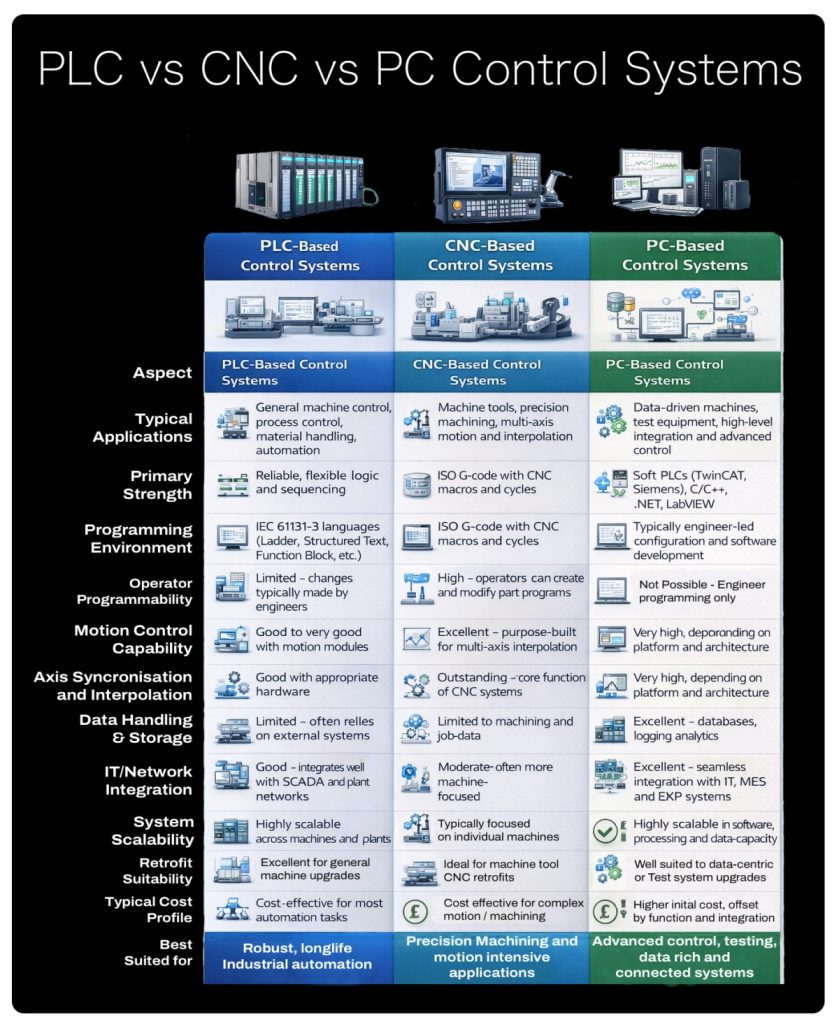
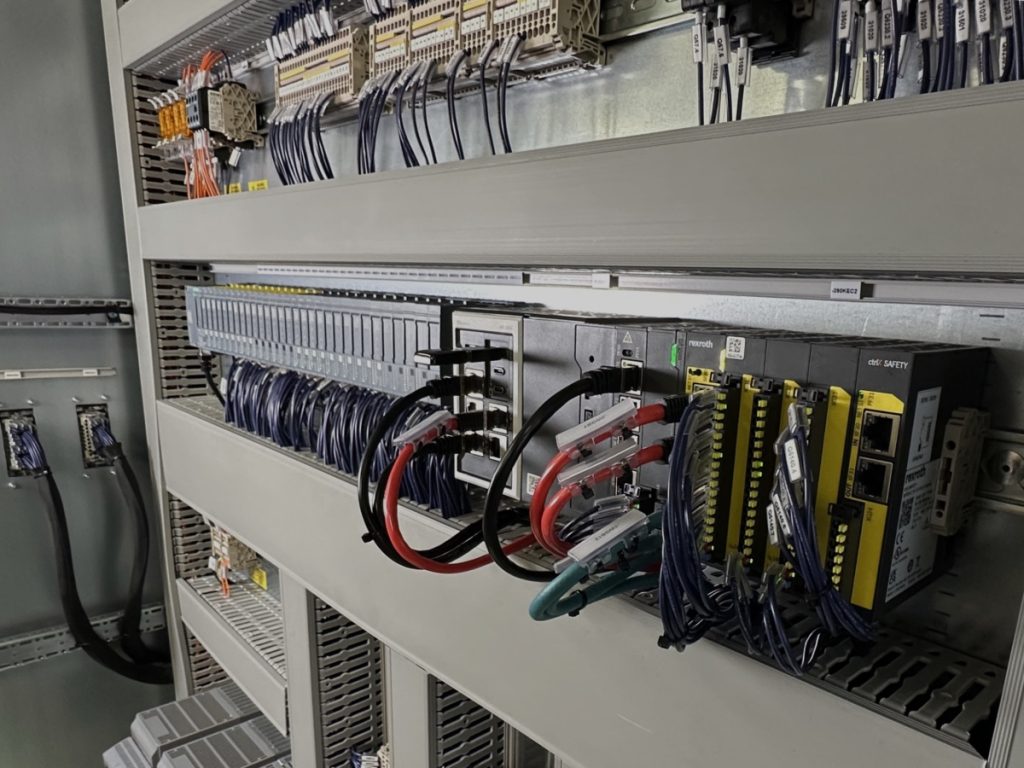
Programmable Logic Controllers (PLCs) typically form the core of modern machine and process control systems. Their modular architecture allows the control platform to be precisely matched to the application, with the selection of a CPU offering the appropriate processing speed, memory capacity and performance for the task. Input and output modules are then configured to suit the machine’s sensors, actuators and field devices, alongside any required communication or networking interfaces.
PLCs provide a highly flexible and scalable control solution, enabling systems to be expanded or adapted as operational requirements change. Through industrial networks such as Profinet, EtherNet/IP and EtherCAT, PLCs can seamlessly communicate with other automation devices, higher-level systems and plant networks, ensuring reliable real-time control and data exchange.
Advanced motion and servo systems can also be fully integrated within PLC-based control architectures. This can be achieved either through dedicated motion control modules housed within the PLC rack—allowing precise speed and position control—or by interfacing with intelligent servo drive systems that incorporate their own positioning functionality. In both cases, tight integration with the PLC ensures accurate, synchronised motion control across the machine or process.
Why PLC-Based Control Systems?

Industrial Reliability
Designed for continuous operation in harsh environments, with high immunity to electrical noise, temperature extremes and vibration.
Proven Technology
Widely adopted and trusted across industrial automation for machine and process control.
Flexible and Scalable
Modular architectures allow systems to be tailored to the application and easily expanded or modified in the future.

Long-Term Support
PLC platforms typically offer extended product lifecycles, strong vendor support and long-term availability of spares.

Standards-Based Programming
Compliance with IEC 61131-3 ensures structured, maintainable software and easier long-term support.
Easy Integration
Native support for industrial networks such as Profinet, EtherNet/IP and EtherCAT enables seamless integration with drives, HMIs, SCADA and plant systems.
Lower Lifecycle Risk
Reduced dependency on proprietary hardware or operating systems results in predictable performance and lower total cost of ownership.